
Imagine you’re behind the wheel of a 53-foot trailer, circling a cramped parking lot in Scottsdale just to find a spot for your medical exam. It’s frustrating, it’s a waste of fuel, and it eats into your driving hours. Getting your DOT physical phoenix doesn’t have to be a logistical nightmare that threatens your livelihood. You shouldn’t have to choose between keeping your CDL current and maintaining your delivery schedule.
Most drivers dread the traditional clinic experience. Between the long wait times, the sterile rooms, and the high-stress environment that can send your blood pressure spiking, it’s a burden on your time and health. We agree that the old way of doing things is broken. That’s why we’ve created this guide to show you exactly how to prepare for and pass your exam using modern, mobile-first medical solutions that prioritize your convenience.
You’ll learn how to manage potential health disqualifications and leverage on-site exams in Mesa, Chandler, and Glendale that come directly to your fleet or home. We’ll walk you through the essential preparation steps to ensure your FMCSA paperwork is filed correctly while minimizing your downtime and keeping you on the road.
Key Takeaways
- Skip the frustration of parking a semi-truck at a traditional clinic by scheduling a DOT physical phoenix that comes directly to your home or fleet location.
- Ensure you have your medical history, current prescriptions, and corrective lenses ready to guarantee a smooth, same-day certification process.
- Learn how mobile exams in Scottsdale, Mesa, and Glendale eliminate long waiting room delays while keeping your CDL paperwork FMCSA-compliant.
- Understand the specific health benchmarks for blood pressure and vision that Arizona commercial drivers must meet to stay on the road.
- Discover the benefits of on-site medical diagnostics that allow for professional health screenings without sacrificing your valuable driving hours.
Understanding DOT Physical Requirements in Arizona
Your commercial driver’s license is more than just a permit; it’s your livelihood. In a major logistics hub like Phoenix, maintaining your DOT physical is the only way to stay legally compliant and behind the wheel. The Federal Motor Carrier Safety Administration (FMCSA) mandates that every commercial driver must pass a medical exam to ensure they can safely operate heavy machinery. This exam results in a Medical Examiner’s Certificate (MEC), often called a medical card, which proves you’re physically fit for the demands of the road.
Arizona CDL holders must adhere to strict state and federal guidelines. Whether you’re navigating the busy corridors of I-10 through Tempe or hauling freight from Glendale to Surprise, your certification must be performed by a provider listed on the National Registry of Certified Medical Examiners (NRCME). These providers are trained to understand the specific stressors drivers face, from the intense Arizona heat waves to the long hours required for interstate transport. If your medical card expires, your CDL is downgraded automatically, which can lead to immediate job loss and hefty fines.
Who Needs a DOT Physical?
Not every driver needs this certification, but the requirements are broader than many realize. You must obtain a DOT physical phoenix if you operate in these categories:
- Commercial Vehicles: Any vehicle with a gross vehicle weight rating (GVWR) of more than 10,000 pounds.
- Passenger Transport: Vehicles designed to transport 15 or more passengers, or 8 or more passengers if you’re being compensated.
- Hazardous Materials: Any vehicle used to transport materials that require placarding under federal regulations.
FMCSA Compliance Standards for 2026
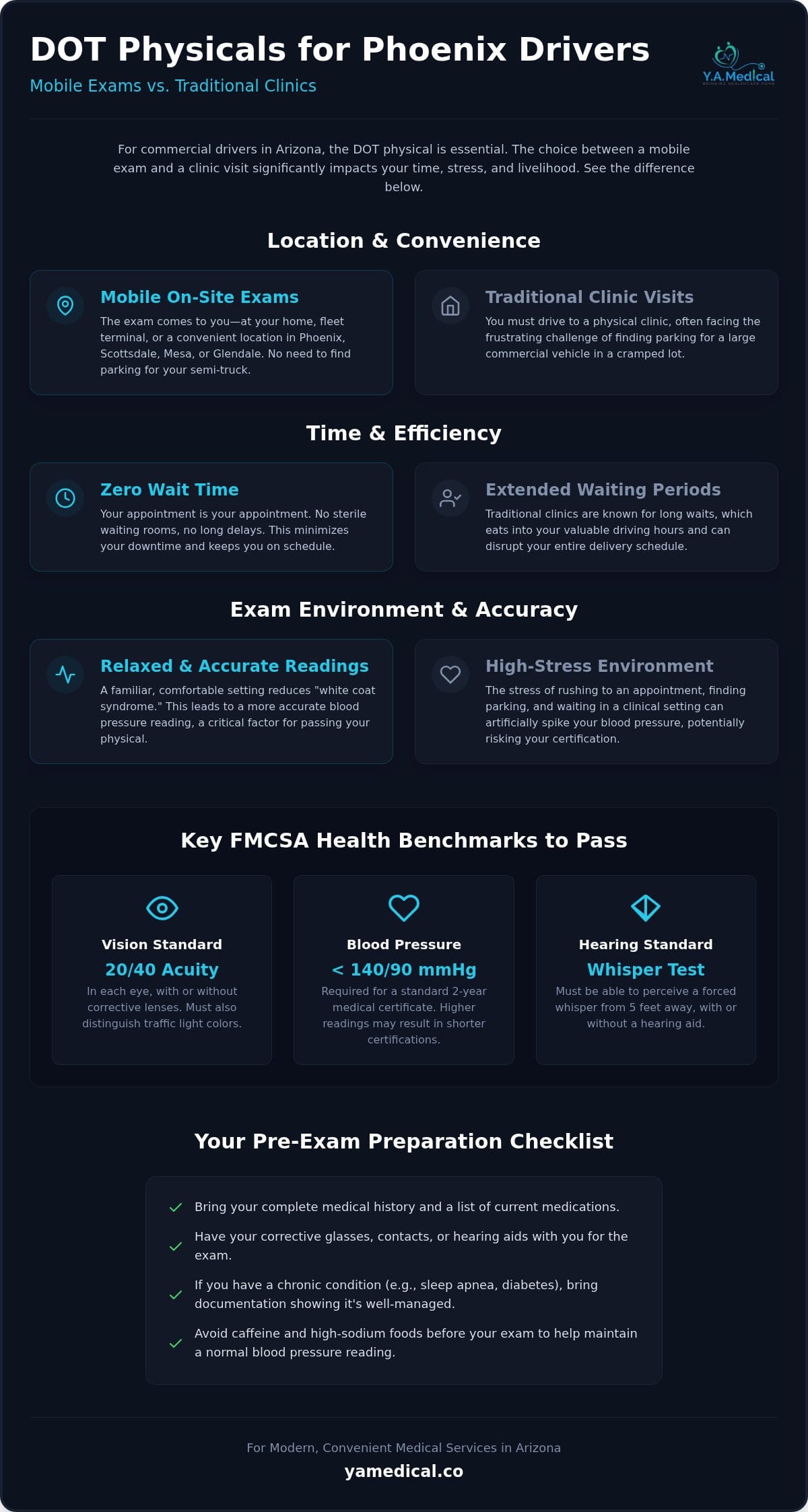
The standards for 2026 focus on preventative health and managing chronic conditions that could cause sudden impairment. To pass, you’ll need to meet specific benchmarks. Your vision must be at least 20/40 in each eye, with or without corrective lenses. You must also be able to perceive a forced whisper from five feet away to meet hearing requirements. Blood pressure is another critical factor; a reading below 140/90 is generally required for a standard two-year certification.
If you manage chronic conditions like diabetes or sleep apnea, don’t panic. You can still pass, but you’ll need to provide documentation showing that your condition is well-controlled. Being honest about your medical history is vital. Accurate disclosure prevents legal complications later and helps your medical guide provide the best advice for keeping you healthy and on the road across Scottsdale, Mesa, and Chandler.
The DOT Physical Exam Process: What to Expect Step-by-Step
A professional medical exam shouldn’t feel like an interrogation. When you schedule a DOT physical phoenix, the goal is to confirm your fitness for duty while keeping you at ease. The process begins with a detailed review of your medical history. You’ll discuss current medications, past surgeries, and any chronic conditions like hypertension or sleep apnea. This conversation helps the provider understand your health baseline before moving into the physical assessments.
Next, the provider checks your vital signs. This includes measuring your blood pressure, pulse rate, and body temperature. High blood pressure is a common concern for drivers, often exacerbated by the stress of traditional clinic waiting rooms. By choosing a mobile provider who visits you in Scottsdale or Glendale, you can often achieve a more accurate, relaxed reading. The examiner then performs a comprehensive physical check, evaluating your cardiovascular health, respiratory function, and musculoskeletal strength to ensure you can handle the physical rigors of commercial driving.
Vision and Hearing Screenings
Safety on the road starts with your senses. To pass the vision portion, you must demonstrate at least 20/40 acuity in each eye. This applies whether you use glasses, contacts, or see clearly without them. You must also show the ability to distinguish between the colors of standard traffic signals. For hearing, the examiner usually performs a whisper test. You’ll need to perceive a forced whisper from a distance of at least five feet. If you use a hearing aid, that’s perfectly acceptable, provided it helps you meet these FMCSA standards.
Mobile Diagnostics and Lab Testing
A key part of the exam is the DOT urinalysis. It’s vital to know that this is not a drug screen; instead, it checks for underlying health issues. The provider looks for glucose, protein, and blood in your urine, which can indicate undiagnosed diabetes or kidney problems. One of the major advantages of modern mobile medicine is that these tests are performed on-site with immediate results.
In some cases, your medical history might require more in-depth testing. If you have a history of heart issues, a provider can perform mobile EKGs or labs right at your location in Peoria or Tempe. This level of mobile diagnostic care ensures that even complex medical backgrounds are handled efficiently. If you’re concerned about how your health history might impact your certification, our mobile medical guides can provide a professional assessment in a low-stress environment.
Mobile vs. Clinic-Based DOT Physicals in Phoenix
Traditional brick-and-mortar clinics often force drivers into a one-size-fits-all model that doesn’t respect their schedule. You might spend hours in a crowded waiting room in Surprise or Chandler just for a brief exam. This traditional approach is increasingly out of step with the fast-paced logistics industry. When you choose a mobile DOT physical phoenix, you reclaim your day. Instead of sitting on a plastic chair next to sick patients, you stay in your cab or at your kitchen table until the provider arrives.
The logistics of parking a 53-foot trailer in a standard Phoenix medical office lot can be a nightmare. Many clinics simply aren’t built for commercial vehicles. Mobile exams eliminate this stress entirely. Whether you’re parked at a truck stop in Peoria or finishing a shift in Glendale, the medical guide comes to you. This level of privacy and comfort often leads to better clinical outcomes; drivers are more relaxed and less likely to experience “white coat” symptoms caused by the stress of navigating tight city traffic just to reach an appointment.
The Logistics of Mobile Care
YA Medical bridges the gap for drivers in Scottsdale, Peoria, and Glendale by providing on-demand healthcare where they work. Scheduling a same-day visit is a critical tool for avoiding CDL expiration. If you realize your medical card is about to lapse, you don’t have to wait weeks for an opening at a traditional clinic. Mobile providers offer the speed you need to stay on the road. Additionally, avoiding a traditional urgent care phoenix waiting room reduces your exposure to seasonal illnesses, which is vital for maintaining your health during the busy monsoon season or intense Arizona heat waves.
Fleet and Employer-Based Solutions
For fleet managers, the benefits of mobile medicine scale quickly. Coordinating physicals for entire construction crews or hospitality transport teams at a single logistics hub in Phoenix saves thousands in operational downtime. Instead of sending drivers out one by one, a provider can certify multiple team members in a single afternoon. It’s a highly efficient way to manage a large workforce without sacrificing quality of care.
This streamlined approach includes centralized billing and digital record-keeping. It allows companies to manage compliance for dozens of drivers without the paperwork headaches of traditional clinics. Whether your team is based in Paradise Valley or operating out of a depot in Mesa, mobile solutions keep your fleet moving efficiently and your records up to date.
How to Prepare for Your CDL Medical Exam: Preparation Checklist
Don’t wait until the morning of your appointment to hunt for paperwork. A successful DOT physical phoenix requires a small amount of proactive planning to ensure you walk away with your certification. Whether you’re starting your day in Mesa or wrapping up a route in Scottsdale, being prepared is key. Start by gathering a complete list of your current medications, including the specific dosages and the prescribing doctor’s name. If you use glasses, contact lenses, or hearing aids, you must have them with you. The provider needs to test your corrected vision and hearing to verify you meet safety standards.
If you’re treated for sleep apnea, bring your CPAP compliance data. Usually, a 90-day report is necessary to prove you’re using the device as prescribed. On the day of the exam, skip the extra cup of coffee. Caffeine is a stimulant that can temporarily inflate your blood pressure, potentially leading to a shorter certification period or a follow-up requirement. Stick to water and eat a light, healthy meal instead to keep your vitals stable.
Medical History and Documentation
If you’ve had recent surgeries or manage a heart condition, you’ll need clearance from your specialist. A letter from your cardiologist or neurologist stating that you are stable and fit to operate a commercial vehicle is often required to finalize your MEC. If you have a history of heart attack or stent placement, your cardiologist’s letter should include the results of your most recent stress test. For drivers with diabetes, have your latest A1C results ready. While the FMCSA has modernized its rules for insulin-treated drivers, having your logs and medical records organized prevents unnecessary delays.
Day-of Preparation Tips for Arizona Drivers
Living in the Valley means dealing with extreme environmental factors. During intense Phoenix heat waves, your body works harder to stay cool, which can elevate your heart rate and blood pressure. If you’re in Chandler, Paradise Valley, or Glendale, staying cool before your appointment is a priority. During the monsoon season, high humidity and heat can lead to rapid dehydration. This is particularly important for your urinalysis during a DOT physical phoenix; being properly hydrated ensures your kidney function and glucose levels are represented accurately in the lab results. If you wake up with a temporary illness like a fever or a severe sinus infection, it’s often better to reschedule. Acute illness can skew your vital signs and lab results, making it harder to pass the physical on the first try.
Scheduling Your Same-Day Mobile DOT Physical in Phoenix
Booking a DOT physical phoenix should be as simple as ordering a part for your rig. You shouldn’t have to spend hours on hold or wait days for a callback from a busy clinic. Modern online booking allows you to secure a slot that fits your specific route or downtime. Once you’ve confirmed your appointment, a licensed medical guide travels directly to your location. Whether you’re at a distribution center in Mesa or your own driveway in Tempe, we bring the exam to you. This immediacy ensures you never have to worry about a gap in your certification.
When the provider arrives, the experience is direct and professional. They bring all necessary diagnostic equipment, turning any quiet space into a private exam room. Because all testing is done on-site, there’s no waiting for a lab to mail back results. If you meet the FMCSA standards, you’ll receive your Medical Examiner’s Certificate (MEC) immediately. This allows you to upload your documents to the DMV right away, keeping your status active without the typical administrative delays that plague traditional healthcare models.
Service Areas Across the Valley
We provide comprehensive mobile coverage across the entire Valley, including Chandler, Paradise Valley, and Peoria. This service is especially helpful for ‘snowbirds’ or seasonal drivers who might be passing through Arizona and need a quick, reliable certification before heading back out on the road. To prepare for your visit, simply ensure you have a well-lit area with enough room for the provider to conduct the physical exam and vision test. A quiet truck cab or a small office space works perfectly for these mobile visits.
Beyond the Physical: Comprehensive Mobile Health
Your health is about more than just passing a mandatory test. The logistics industry is demanding, often leading to significant driver fatigue and physical strain. To support your long-term wellness, you can combine your exam with mobile IV therapy to rehydrate and recover after a long haul through the Arizona heat. The same mobile-first approach that makes your DOT exam convenient also extends to other sensitive health needs; drivers who prefer privacy and discretion for personal health concerns can access STD testing and treatment through discreet mobile and virtual care services. This holistic approach helps you manage the stressors of the job while staying compliant and energized for the road ahead.
Regarding the business side of your care, we provide clear, professional documentation to assist with employer reimbursement or insurance claims. We make sure the financial process is as smooth as the medical one. We also set up automated reminders for your next certification cycle. This ensures your next DOT physical phoenix never sneaks up on you, allowing you to focus on your career while we focus on your compliance and health. To further support your overall wellness, resources from occupational health specialists like Persona Health are available online to help you monitor your mental health and manage the stressors of a long-haul career.
Secure Your CDL Without the Waiting Room Stress
Staying on the road in Arizona shouldn’t require navigating a logistical maze. You now understand that a modern DOT physical phoenix can happen at your home or depot, saving you hours of downtime and the frustration of clinic parking. By following the preparation checklist and organizing your medical records, you’ll ensure a smooth exam that keeps your livelihood secure. This mobile-first approach is the efficient way to stay compliant in a fast-paced industry.
Our licensed NRCME providers focus on your comfort and clinical accuracy. We deliver professional medical services directly to you in Scottsdale, Mesa, or Glendale. We’ve eliminated the need for crowded waiting rooms and provide same-day mobile appointments to meet your urgent certification needs. You’ll get back to your route faster, knowing your FMCSA paperwork is handled with professional precision.
Schedule your same-day mobile DOT physical in Phoenix now
We’re here to help you navigate the medical requirements of your career while you keep the Valley moving. Your time is valuable, and your health is our priority. It’s our mission to make your certification as easy as possible. Stay safe and healthy on the road.
Frequently Asked Questions
Can a mobile doctor perform a valid DOT physical?
Yes, any medical provider on the National Registry of Certified Medical Examiners (NRCME) can perform a valid exam regardless of the setting. Our licensed providers bring all the necessary diagnostic equipment to your home, office, or depot. This ensures your DOT physical phoenix meets every federal safety standard while providing the convenience of mobile care in Scottsdale, Mesa, or Glendale.
What happens if I fail my DOT physical in Phoenix?
If you don’t meet the initial health benchmarks, you won’t necessarily lose your CDL forever. The examiner may issue a temporary certificate or a “disqualification” until the underlying health issue is resolved. Working with a modern medical guide allows you to address concerns like high blood pressure or vision issues. You can often re-test once your condition is stable and documented by a specialist.
How long is a DOT medical certificate valid for in Arizona?
A standard medical examiner’s certificate is valid for 24 months if you are in good health. However, certain medical conditions like hypertension or diabetes may require more frequent monitoring. In these cases, the provider might issue a certificate for one year, six months, or even three months. Staying ahead of your expiration date is vital for maintaining your driving status in Peoria and Tempe.
Do I need a drug test as part of my DOT physical?
No, a DOT drug screen is a separate requirement from the DOT physical exam. The urinalysis performed during your physical is a clinical test used to check for kidney function and glucose levels. While many employers in the Phoenix area choose to schedule both tests at the same time for efficiency, the physical itself does not include a federal drug or alcohol screening.
What should I do if I have high blood pressure during the exam?
Stay calm and follow the deep breathing techniques suggested by your provider. High readings are common in stressful clinic environments, but mobile exams in the comfort of your own space often lead to more relaxed results. If your pressure remains above 140/90, you might receive a short-term certificate. This gives you time to work with a doctor to manage your levels through medication or lifestyle changes.
Can I get a DOT physical if I am a diabetic?
Yes, drivers with diabetes can maintain their certification if their condition is well-controlled. If you use insulin, you must meet specific FMCSA requirements and provide documentation of your A1C levels. Our providers understand these complexities and can guide you through the necessary paperwork. Providing clear medical logs during your DOT physical phoenix helps ensure your certification process moves forward without unnecessary delays or complications.
How much does a DOT physical cost in the Phoenix area?
Costs for medical exams vary across the Valley depending on the provider and the type of service requested. Mobile exams often reflect the added value of travel and the elimination of driver downtime. You should verify current rates with the specific medical group or check if your employer covers the fee. Many logistics companies in Chandler and Paradise Valley have established accounts to streamline these costs for their fleets.
What is the difference between a CDL physical and a DOT physical?
There is no clinical difference between the two; they are different names for the same FMCSA-mandated exam. The “DOT” refers to the Department of Transportation standards, while “CDL” refers to the commercial driver’s license that requires the certification. Both terms describe the medical assessment required to prove you are fit for duty. Whether you call it a CDL or DOT exam, the medical requirements remain the same.